
More than 500 hours of GP time over a five month-period was freed up as a result of greater collaboration between community pharmacists and a GP practice in Manchester.
The Community Pharmacy and General Practice conference in Birmingham this week heard about measures that the Brooke Surgery took to increase use of the Pharmacy First scheme and make the most out of the Independent prescribing (IP) pathfinder programme.
The latter, launched in October 2025, authorises specially-trained pharmacists to prescribe NHS medicines directly to patients for a range of illnesses with the aim of shifting workload from GP practices to pharmacies.
The IP pathfinder initiative was initially centrally funded by NHS England but some ICBs, including Greater Manchester, have subsequently taken on financial responsibility for it.
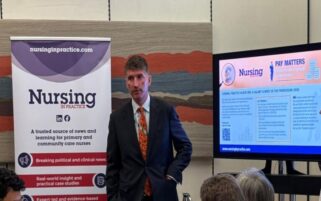
Ishaq Goga, lead clinical mentor for the community pharmacy IP Pathfinder programme, Greater Manchester and lead clinical pharmacist at the Brooke Surgery, said he saw participation in the IP scheme as a ‘great opportunity’ but also recognised that Pharmacy First referrals needed a boost.
‘There was a lack of collaboration and communication between general practice and community pharmacy for whatever reason, so we sat down to think about how we could make it work better,’ he said.
‘My background is in community pharmacy and I have always found that the best way to overcome barriers is by improving communication.’
The practice approached local pharmacies, inviting them to have a conversation with the GP partners and the wider team on the best way forward, which four pharmacies responded to, including Boots and Well Pharmacy. From that discussion, it was decided to create a Teams channel for support.
Mr Goga explained: ‘The biggest complaint from our patients was that if they were referred to Pharmacy First but no action could be taken for whatever reason they would be left in limbo.
‘So the teams channel was created for pharmacies to be able to communicate directly with us when a patient was referred. It included GP partners, the triage team, the lead clinicians, and myself. And it is NHS encrypted so you can share patient identifiable data there.
‘It worked really well. It’s a simple concept but it has allowed for unique interventions because messages and responses are given in real-time. It also provides assurances since pharmacists have access to mentors and clinicians who are giving feedback on their consultations.’
The pathfinder programme proved to be lifechanging for the surgery, Mr Goga further said.
He described it as ‘amazing opportunity’ for community pharmacists who developed their workforce and increased the number of prescribers to help and deliver the service.
Data showed that between October 2025 and March 2026, there were a total 2,355 referrals made by Brooke Surgery to Pharmacy First. Out of those, 604 were IP pathfinder consultations, 807 were for ambulatory blood pressure monitoring (ABPM) and 209 for contraceptive services.
‘Our calculations, based on average BMA clinical appointment times, showed that the repurposed number of hours given back to GPs and our GP practice was 521 hours,’ Mr Goga said.
Of those, 109 hours were released as a result of the IP Pathfinder programme and 412 via Pharmacy First services This equated to 2,084 additional GP appointments.
In addition, a total of 254 hours of nursing time was freed up, with 52 hours released due to contraceptive requests to pharmacy services and 202 hours due to ABPM being delivered via pharmacy.
‘Having this time freed up helped us meet demand and access in general practice. Mr Goga said. ‘Patients were also happy they were being referred to the appropriate provider in a timely manner and treated accordingly.
‘It’s got to the point that when it looked like the IP pathfinder programme might be drawing to an end, GP partners were absolutely panicking.’
Mr Goga added that there was a positive impact on the nursing team too, although initially, he admitted, they were worried that their core work was being taken away.
‘Actually, we upskilled the nursing team, so they are able to do spirometry and provide more enhanced treatments. They were also able to carry out more blood test appointments, ECGs, smear tests, asthma or COPD reviews, and vaccinations.’
Mr Goga explained that the change moving from treating minor ailments to providing integrated clinical care came about because of building trust through clinical feedback and two-way referrals and collaborative working.
‘GP surgeries and pharmacies need to be open to have a conversation and not be held back by past experience and work together,’ he advised.
Key success factors include developing meaningful relationships between community pharmacy and GP practices; setting clear expectations and agreeing roles, responsibilities and referral processes; being able to provide rapid feedback; and involving the whole practice in the new way of working, including GPs, nurses reception and other teams.
Mr Goga concluded: ‘I’m really proud of this piece of work. We are now piloting referring lipid patients and hypertensive patients and there are conversations about phlebotomy.
‘We worked collaboratively and have seen positive patient outcomes and tangible benefits.
Also at the conference, organised by Management in Practice’s publisher Cogora, primary care minister Stephen Kinnock said that ‘stronger collaboration’ between community pharmacy and general practice is ‘vital’ to the future success of the NHS.
In a video address to an audience of primary care staff including GPs, practice managers and pharmacists he said: ‘Stronger collaboration between community pharmacy and general practice is not just desirable; it’s vital to the future success of the NHS.
‘Community pharmacy is embedded in every neighbourhood, and general practice sits at the heart of continuous care alongside the wider primary workforce.
‘You will be central to turning the ambitions of the 10-Year Health Plan into reality for patients. Crucially, the success of this plan depends on you – on your ability to work together, use your skills to the fullest and drive this change forward.’
It comes as the Government announced last month that the Pharmacy First scheme will be expanded to include IP, with NHS England expected to create an expert clinical reference group across primary care to consider the new pathways.
Bacterial conjunctivitis, allergic conjunctivitis, oral thrush, skin infections and respiratory tract infections services could be considered for the expanded service.
Mr Kinnock added that general practice and community pharmacy working together will be ‘central’ to the delivery of the 10-year plan for the NHS, with care delivered in the community by ‘skilled professionals who know their patients best’.