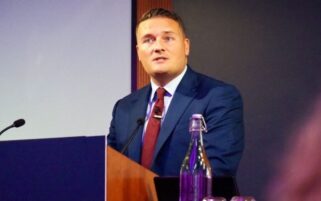

The Government is looking for GPs to ‘step up’ and lead the new neighbourhood health service, the health secretary has said, as a BMA survey unveils deep concern about his 10-year plan.
Wes Streeting was addressing the BMA’s special representative meeting to debate the plan when he said he wishes GPs to lead the new neighbourhood health service.
However, his comments came against the backdrop of a new BMA survey of GPs, which found deep concern about the autonomy of general practice; financial stability; the likelihood of becoming a salaried service; and continuity of patient care.
According to the survey of nearly 500 GPs, close to nine in 10 (89%) believe the 10-year plan will lead to a decrease in autonomy for general practice. Some 87% also think it increases the likelihood of general practice becoming a salaried service.
The survey also found that more than three-quarters (77%) of GPs believe the 10-year plan will decrease continuity of patient care. And that 59% think it will reduce the overall financial sustainability of the NHS.
Addressing concerns expressed by the profession that the neighbourhood health service would undermine GP autonomy, Mr Streeting told the BMA meeting that he has been ‘very clear’ that integrated health organisations would ‘not necessarily’ be ‘hospital-led’.
He said: ‘So we’ve just announced the sites across the country, places across the country, that will be sort of trailblazers on neighbourhood health. They will each be taking slightly different approaches. We’ll be taking a test-and-learn approach, and we will be iterating and reiterating.
‘I think the final thing I wanted to say is, in terms of the future of the NHS and the system, and where we’re going on things like integrated health organisations, I’m really clear that I don’t think these are necessarily going to be hospital-led organisations. I think there is a real role for GP leadership in this space, and primary care to be in the driving seat. And so I’m looking for partners in primary care who are willing to step up and show everyone else what that future could look like if we had primary care-led health services, you know, including commissioning.
‘So I think there’s lots to be excited about, probably in primary care more than any other area, in many respects, in terms of where we’re going, and we’ll want to work with you on that.’
He also appeared to reassure GPs that they would not be forced to work under the two new contracts proposed in the 10-year plan.
‘And then the final thing to say on this is that the new model contract will be developed and the existing contract will still be there. So we’re not kind of forcing everyone to move from one way of working to another,’ he said.
‘What we’re doing is taking, and this will apply across the board, a test and learn approach where people can try new models, try new ways of working. We’ll see what works most effectively. And I’m convinced that, you know, as ever, you have your pioneers. Once something is proven, more people will be willing to follow, and that’s the broad approach to reform we’re taking.’
Set to roll out early next year, the new contracts will offer ‘an alternative’ to the traditional GP partnership model, the 10-year plan said, adding that they would also be offered to hospital trusts.
- The first of the new contracts will support the creation of ‘single neighbourhood providers’, delivering enhanced services to people with similar needs across a defined local area, typically covering a population of around 50,000 – similar in scale to current Primary Care Networks.
- The second will establish ‘multi-neighbourhood providers’, which will serve around 250,000 people and focus on delivering services that require coordination across multiple neighbourhoods, such as end-of-life care
Among the BMA’s demands on the Government to avoid a GP dispute, they must commit to favouring GPs to lead the neighbourhood health service.
A version of this story first appeared on our sister publication Pulse.